
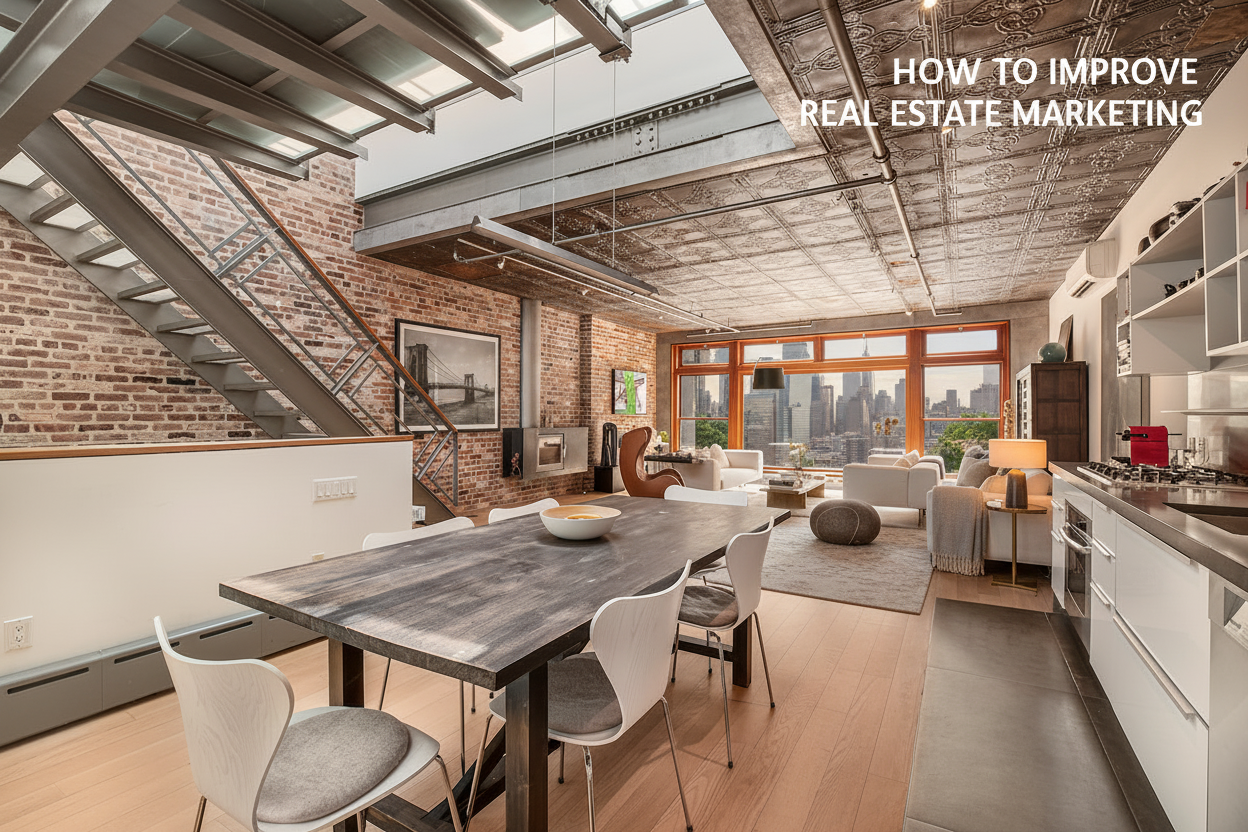
Real estate marketing has changed more in the last five years than in the previous twenty. Buyers scroll through listings on their phones, compare properties in seconds, and form an opinion long before they ever request a showing. If your marketing doesn't hold their attention immediately, it doesn't matter how good the property is.
After photographing real estate across Manhattan, Brooklyn, Queens, and beyond for over two decades, we've watched marketing strategies come and go. Some agents adapt quickly. Others keep doing what worked in 2015 and wonder why their listings sit longer than they should. This guide breaks down what actually moves the needle today.
Also Read: Real Estate Photography Pricing
Why Real Estate Marketing Matters More Than Ever
Quick answer: Real estate marketing determines whether a listing gets noticed, how much interest it generates in the first 48 hours, and ultimately how quickly and profitably it sells. Weak marketing can undervalue a strong property, while strong marketing can create urgency around an average one.
Buyers usually decide whether to explore a listing within seconds of viewing the first images. That single moment, the thumbnail, the cover photo, the first frame of a video, often determines whether someone clicks in or scrolls past. Agents who understand this treat marketing as a core part of the sale, not an afterthought once the listing agreement is signed.
The market has also become more visual. Buyers expect video walkthroughs, 3D tours, and drone footage as standard, not premium add-ons. A listing without these feels incomplete compared to competitors that have them.
Also Read: Why Real Estate Videography Sells NYC Properties Faster in 2026
The Foundation: Visual Content Comes First
Quick answer: Photography, video, and interactive tours are the foundation of real estate marketing because they're the first, and sometimes only, impression a buyer forms before deciding to schedule a showing. Everything else (descriptions, ads, social posts) supports what the visuals communicate.
In our experience photographing luxury apartments and brownstones across NYC, we've noticed that listings with inconsistent or amateur photography almost always underperform, regardless of price point or location. A beautifully staged $2 million condo can look unremarkable with poor lighting, and a modest one-bedroom can look genuinely appealing with the right composition and natural light.
A few things we consistently see make the biggest difference:
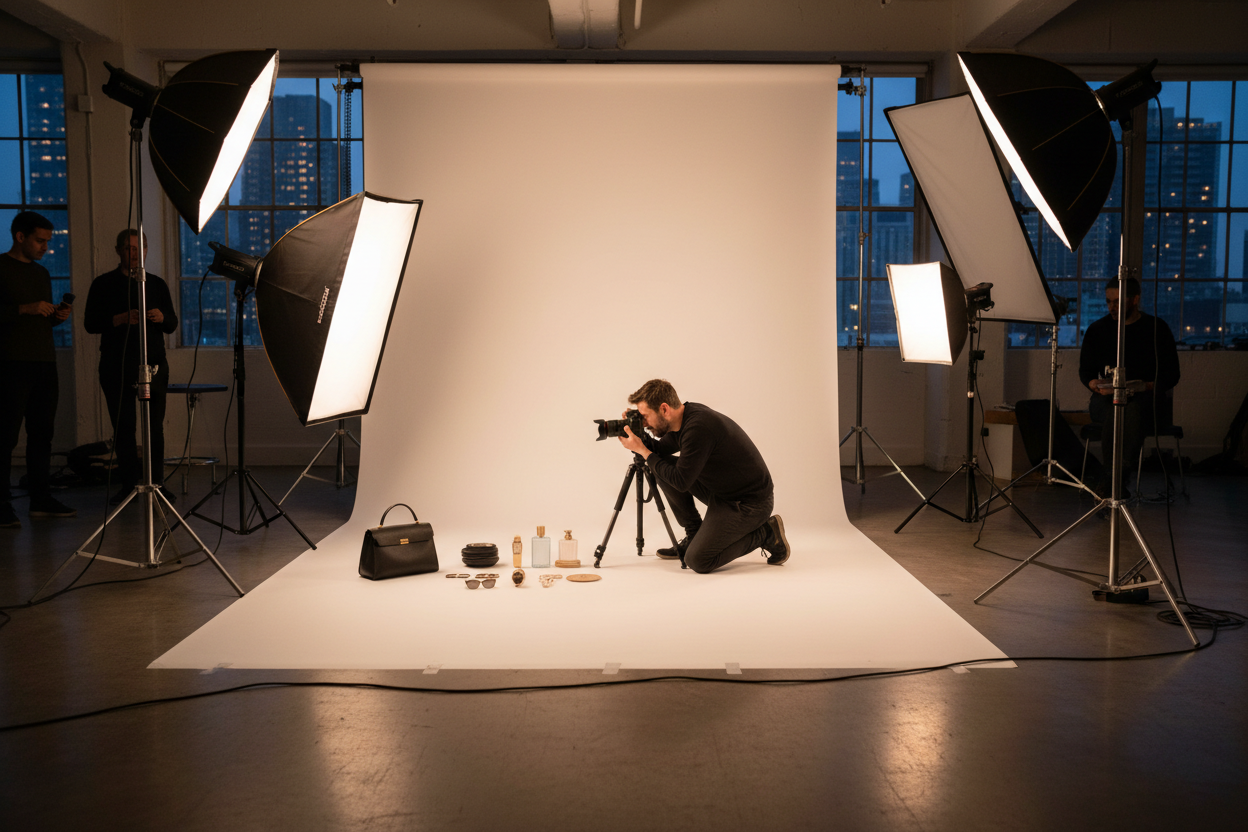
Lighting. Professional lighting affects perceived room size and quality far more than most sellers expect. Harsh overhead lighting or poorly balanced window light can make a space feel smaller and less inviting than it actually is.
Composition. Straight lines, correct vertical perspective, and wide but accurate framing help buyers understand a space's actual layout rather than a distorted version of it.
Consistency. A gallery of images shot with the same style, color balance, and framing approach signals professionalism and builds trust before a buyer ever steps inside.
Also Read: Why Vertical Real Estate Videos Perform Better on Instagram and TikTok
Video and Drone Footage
Video walkthroughs let buyers experience flow and scale in a way photos alone can't. Drone photography adds context, showing proximity to parks, transit, waterfront, or a building's presence on the block. For properties in Brooklyn or Staten Island with more outdoor space, aerial footage is often what convinces an out-of-town buyer to book a flight to see it in person.
Matterport 3D Tours
Matterport and similar 3D tour technology let buyers "walk through" a property remotely, room by room, at their own pace. This matters most for:
- Out-of-state or international buyers
- Luxury properties where buyers expect a premium experience
- Investment properties being evaluated without an in-person visit
We've found that listings with a 3D tour tend to attract more serious inquiries, because buyers who take the tour have effectively pre-qualified their own interest before contacting an agent.
Also Read: Best Time of Day to Shoot a NYC Apartment (Golden Hour & Twilight)
Common Mistakes in Real Estate Marketing
Even experienced agents fall into predictable traps. Here are the ones we see most often:
Using a smartphone for listing photos. Phone cameras have improved, but they still struggle with wide interior spaces, mixed lighting, and lens distortion. What looks fine on a phone screen often looks amateurish on a full-size monitor.
Shooting at the wrong time of day. Harsh midday sun creates blown-out windows and heavy shadows. Late afternoon or overcast light is usually far more flattering for interiors.
Skipping decluttering before the shoot. Buyers notice clutter more in photos than in person, because a static image draws the eye directly to what's out of place.
Inconsistent branding across platforms. A listing that looks different on the MLS, Instagram, and a flyer creates a disjointed impression and can make a property feel less credible.
Treating marketing as a one-time task. The best-performing listings are re-promoted, new angles, a price update highlight, a "still available" post, rather than posted once and left alone.
Expert Tips to Improve Real Estate Marketing
- Shoot before staging fades. Fresh flowers, staged furniture, and clean surfaces have a shelf life. Schedule the shoot as close to "showing ready" as possible.
- Lead with the strongest image. The cover photo carries more weight than any other single asset in the listing. Choose the shot that best represents the property's best feature, not necessarily the living room by default.
- Pair photography with a short vertical video. Instagram Reels and TikTok favor vertical video, and a 15–30 second walkthrough often outperforms a static photo carousel for engagement.
- Use floor plans alongside photos. Buyers frequently want to understand layout and flow, especially for properties with unusual floor plans or multiple levels.
- Localize the marketing copy. Mentioning the specific neighborhood, nearby transit, or building amenities helps both buyers and search engines understand the listing's relevance.
- Don't ignore commercial and rental listings. Retail spaces, offices, and rental units benefit from the same visual standards as residential sales, even though they're often treated as lower priority.
Comparison Table: Marketing Assets and Their Best Use Case
| Marketing Asset | Best For | Typical Turnaround | Buyer Impact |
|---|---|---|---|
| Professional Photography | Every listing, all price points | 24–48 hours | High — first impression |
| Drone Photography | Properties with outdoor space, waterfront, or strong curb appeal | 24–48 hours | Medium–High context |
| Video Walkthrough | Social media, out-of-town buyers | 2–4 days | High engagement |
| Matterport 3D Tour | Luxury, remote buyers, investment properties | 2–4 days | High — reduces unqualified showings |
| Floor Plans | Multi-room or complex layouts | 1–2 days | Medium — supports decision-making |
Cost Considerations
Real estate marketing costs vary based on property size, location, and the assets needed. In general:
- Standard photography packages are the most affordable entry point and offer the highest return relative to cost.
- Drone photography and video typically add a moderate cost but are increasingly expected for competitive listings.
- Matterport 3D tours cost more upfront but can reduce the number of unproductive showings by helping unqualified buyers self-select out early.
For lower-priced properties or off-market listings, a solid photography package alone may be sufficient. Full video and 3D packages tend to make the most financial sense for listings above a certain price threshold or in highly competitive micro-markets.
Also Read: Matterport vs. Traditional Floor Plans
Frequently Asked Questions
1. How much does professional real estate photography cost? Pricing depends on property size, location, and the number of images needed. Most agents budget photography as a small percentage of overall marketing spend, since it typically delivers the highest visibility return of any single marketing asset.
2. Do I need drone photography for every listing? No. Drone footage adds the most value for properties with outdoor space, waterfront views, or strong curb appeal. Interior-focused listings, like most Manhattan apartments, may not need it.
3. How long does a real estate photo shoot take? A typical residential shoot takes one to three hours depending on square footage and the number of rooms. Larger properties or those needing drone and video coverage take longer.
4. Is a Matterport 3D tour worth it for a standard listing? It depends on the buyer pool. For local, in-person buyers, standard photography and video are usually sufficient. For remote, international, or investment buyers, a 3D tour adds real value.
5. What time of day is best for real estate photography? Late morning to mid-afternoon on an overcast day, or the "golden hour" near sunset for exterior and twilight shots, generally produces the most flattering and accurate results.
6. Should I stage the property before the photo shoot? Yes, when possible. Staged, decluttered spaces photograph more clearly and help buyers picture themselves in the property, which tends to generate stronger interest.
7. How often should I update a listing's marketing photos? If a property hasn't sold within a few weeks, refreshing the photos, adding a video, or highlighting a price change can re-engage buyers who saw the original listing but didn't act.
8. Can good marketing help a property sell for more? Strong marketing doesn't guarantee a higher sale price, but it does typically generate more interest and competing offers, which can support a stronger negotiating position.
What We've Learned After 20 Years
After photographing thousands of properties across every borough, a few patterns show up again and again.
Many sellers initially believe marketing is something to handle after the listing goes live, a photo gallery to fill in later. But after photographing thousands of listings, we've seen that the properties which perform best treat marketing as part of the launch, not an afterthought.
One thing we've consistently noticed: agents who invest slightly more in visual quality on modestly priced properties often see a disproportionate return, because those listings face more direct competition from similar homes at the same price point. In luxury markets, buyers already expect high production value, so the differentiation has to come from something else, often a strong 3D tour or a well-produced video.
We've also noticed that consistency matters as much as quality. A listing with strong photos but a shaky, poorly lit video creates a disjointed impression. Buyers subconsciously register that inconsistency, even if they can't articulate why a listing feels "off."
Consistent branding across employee and agent headshots, listing photography, and marketing materials builds trust before the first meeting, a pattern we see across both real estate and corporate clients.
Conclusion
Improving real estate marketing isn't about chasing every new platform or trend. It's about getting the fundamentals right: strong, consistent visuals; the right mix of photography, video, and 3D tools for the specific property; and a willingness to treat marketing as an ongoing part of the sale rather than a one-time task. Agents who invest in this consistently tend to see faster interest, fewer unqualified showings, and stronger positioning in a crowded market.
Call to Action
If you're preparing a new listing or looking to refresh how your properties are marketed, professional photography, video, and 3D tours can make a measurable difference in buyer interest. David DuPuy Studios works with agents and property owners throughout New York City, from Manhattan condos to Brooklyn brownstones and beyond, to create visual marketing that supports faster, stronger sales.


Leave a comment
This site is protected by hCaptcha and the hCaptcha Privacy Policy and Terms of Service apply.