
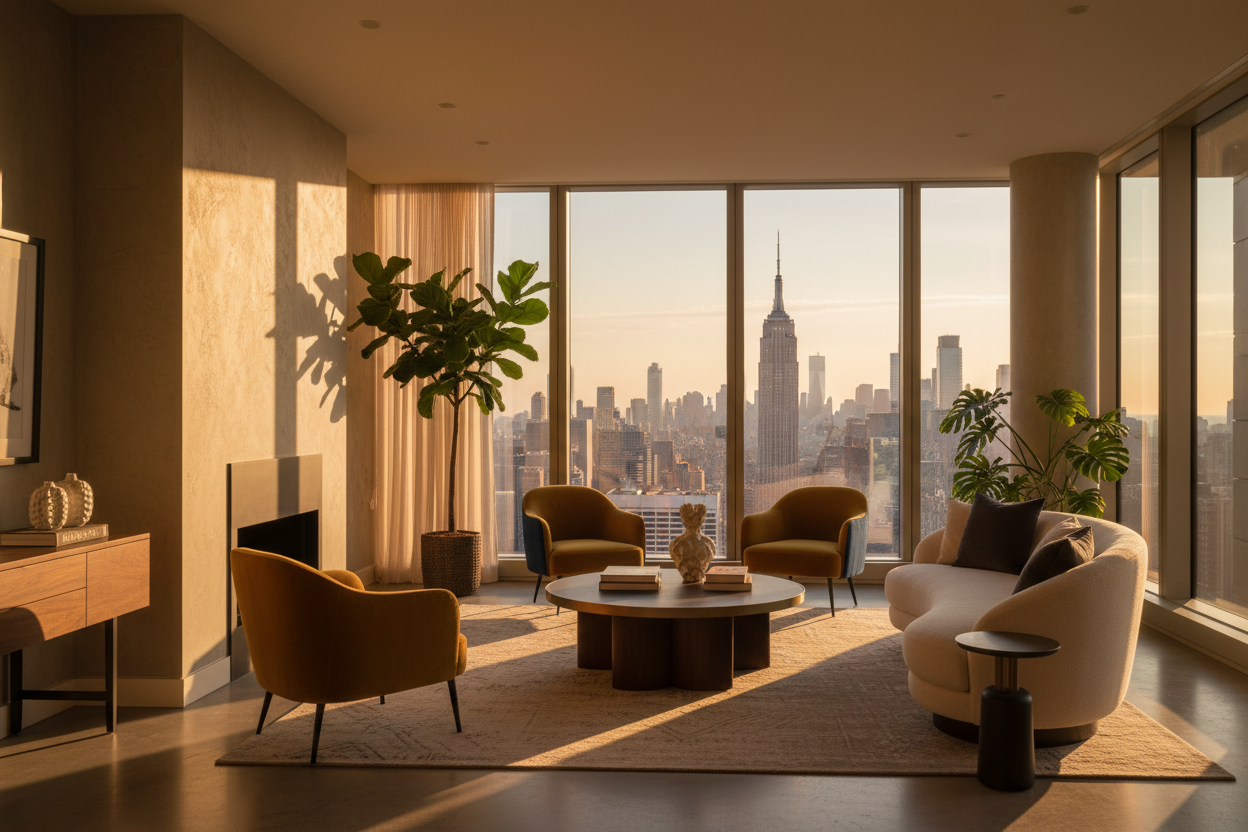
Here's something most people don't think about until they're comparing two nearly identical listings side by side: the apartment with the crisper, warmer, more inviting photos almost always gets more clicks — and it's rarely the apartment itself doing the work. It's the light. Natural light shifts constantly throughout the day, and in a city like New York, where buildings sit shoulder to shoulder and windows face every direction imaginable, timing can be the difference between listing photos that fall flat and ones that actually sell the space.
Why Lighting Matters in NYC Apartment Photography
Light does more than illuminate a room — it shapes how big a space feels, how true the colors read, and whether a room feels warm and lived-in or cold and clinical. Shoot the same living room at 9 a.m. and again at 6 p.m., and you'll get two genuinely different-looking rooms, even though nothing in the apartment has moved.
New York adds its own complications. Neighboring buildings block and bounce light in ways that change block by block. Some apartments only get real sun for an hour or two a day. Streets in the shadow of taller buildings stay dim well into the afternoon, and a fourth-floor unit can have completely different light behavior than the identical layout on the eighteenth floor. There's no universal formula — every apartment has its own light personality, and figuring that out is half the job before a camera ever comes out.
Golden Hour: The Best Choice for Warm, Inviting Interiors
Golden hour is the stretch of time shortly after sunrise and shortly before sunset, when sunlight comes in low, soft, and warm instead of harsh and direct. Morning golden hour tends to suit east-facing rooms — kitchens and bedrooms especially — while evening golden hour is the better call for west-facing living rooms and anything that catches a sunset.
What makes golden hour so effective is the quality of the light itself: shadows stretch out softly instead of cutting hard lines across the floor, window views look rich instead of blown out, and rooms take on a warmth that makes them feel like somewhere you'd actually want to live, not just a photographed box. A prewar one-bedroom with west-facing windows, shot at 6:30 p.m. in October, can look like a completely different apartment than the same room photographed at noon.
Twilight Photography: Perfect for Luxury Listings
Twilight photography happens in that narrow 20-to-30-minute window right after sunset, when the sky still holds color, streetlights are starting to glow, and interior lights are already on. It's the technique behind those listing photos where a building glows against a deep blue sky, or a living room shows off a skyline view with the city lights just beginning to sparkle.
This is where balancing indoor and outdoor exposure really matters — done well, the interior lighting and the fading sky sit in balance instead of one blowing out the other. Twilight shots consistently create the kind of emotional pull that makes buyers stop scrolling, which is exactly why they're worth prioritizing for penthouses, luxury apartments, units with terraces or balconies, and any property with large windows or a skyline view.
Midday Photography: When It Works — and When It Doesn't
Midday sun is direct and unforgiving. It creates harsh shadows, blows out window exposures, and tends to flatten a room's mood rather than enhance it. That said, midday isn't useless — it's actually a smart time to knock out floor plans, straight-on detail shots, and interior spaces that don't get direct sun at all, like interior bathrooms or windowless hallways, where the softer ambient light works fine.
If midday is the only option, a photographer can manage the harshness with diffusion, careful exposure blending, and shooting angles that avoid direct window glare — it's not ideal, but it's workable with the right technique.
How Apartment Orientation Changes Everything
Orientation is really the deciding factor behind all of this. East-facing units get their best light in the morning and can go flat and shadowy by late afternoon. West-facing apartments are the opposite — often dim in the morning, then glowing during evening golden hour. North-facing rooms get soft, consistent, shadow-free light throughout the day, which sounds great but can also read as a little cool or flat without some warmth added in editing. South-facing apartments get the most consistent light overall, often looking good across a wider window of the day than any other exposure.
This is exactly why an experienced photographer scouts a property, or at least asks the right questions about exposure and floor level, before locking in a shoot time. Guessing wastes a trip.
Seasonal Lighting in New York City
The calendar matters just as much as the clock. Summer's golden hour might not start until close to 8 p.m.; in winter, it can hit by 4:15. A cloudy day can actually be a gift for interior shots, since diffused light through the windows softens everything evenly without harsh contrast. And when there's snow on the ground, exterior and skyline shots often benefit from the extra brightness bouncing off the streets below.
Why Professional Timing Makes a Difference
This is where experience genuinely earns its keep. A photographer who's shot hundreds of NYC apartments is tracking weather forecasts, watching sun direction relative to the building, sequencing which rooms to shoot first as the light shifts, and blending natural and artificial lighting so the final images look true to the space — not artificially brightened or obviously staged. It's the same instinct that goes into any kind of portrait work: understanding what makes a subject — whether it's a person or a room — feel like itself, and then finding the light that tells that story honestly.
Conclusion
There's no single "best" time to shoot every NYC apartment. The right call depends on building orientation, floor level, window placement, property style, and what the listing is actually trying to communicate. A sun-drenched one-bedroom in Chelsea and a skyline-view penthouse in Tribeca don't call for the same lighting strategy, and treating them the same is how listings end up looking generic instead of memorable.
If you want your listing photographed at the time of day that actually shows it at its best, schedule a session with David DuPuy Studios — we'll scope the property's light before we ever pick up a camera.


Leave a comment
This site is protected by hCaptcha and the hCaptcha Privacy Policy and Terms of Service apply.