
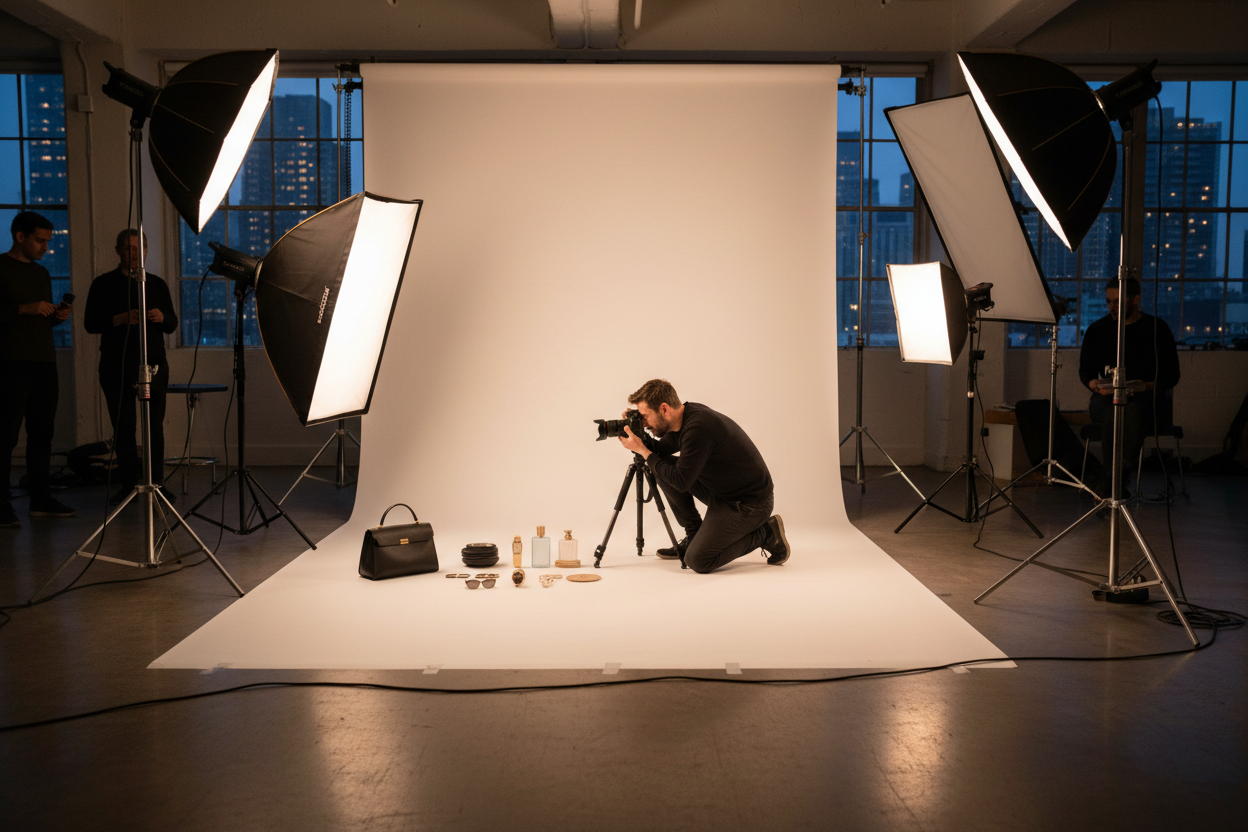
If you've been Googling this question for the last hour and getting wildly different numbers every time, you're not losing your mind. Commercial photography pricing is genuinely all over the place, and there's a good reason for that. A shoot for a local bakery's Instagram page and a shoot for a national ad campaign are both technically "commercial photography," but they might as well be different industries when it comes to cost.
So let's actually talk numbers, what drives them, and how to figure out what you should expect to pay.
The Quick Answer (Because I Know You Want It)
For most small to mid-sized businesses, a commercial photoshoot typically runs anywhere from $500 to $5,000. Larger campaigns, national brands, or shoots involving models, elaborate sets, or extensive licensing can climb well into five or even six figures.
I know that's a huge range. That's because "commercial photoshoot" covers everything from a solo photographer spending two hours shooting product shots on a white background, to a full production crew shooting a campaign that'll run on billboards in Times Square. Let's break it down so you can see where you actually land.
What Actually Drives the Price
1. Photographer experience and reputation
A photographer who's been shooting for two years and building their portfolio is going to charge differently than someone who's shot campaigns for recognizable brands for the last fifteen years. This isn't just ego pricing — experienced photographers work faster, anticipate problems before they happen, and know how to get the shot in fewer takes. You're paying for efficiency and judgment as much as the final images.
2. Usage rights and licensing
This one trips people up constantly. The shoot itself might only be part of the cost. If you want to run these images in a national ad campaign, on billboards, or in print for the next three years, that's a different licensing agreement than using them on your own website indefinitely. Photographers often price based on where and how long the images will be used, not just the time spent shooting.
3. Pre-production and planning
A good chunk of the cost happens before anyone picks up a camera. Location scouting, mood boards, permits, casting, coordinating with stylists or set designers this all takes time and typically gets baked into the quote, even if you don't see a separate line item for it.
4. Crew size
A one-person operation (photographer doing everything) is going to be cheaper than a shoot with a photographer, assistant, hair and makeup artist, and a producer coordinating everyone's schedules. More hands usually means a bigger, more polished production but also a bigger bill.
5. Location
Studio rentals in a major city aren't cheap. Neither is location scouting for that perfect rooftop shot or historic building. If your shoot needs a specific backdrop that isn't your photographer's studio, factor that cost in separately.
6. Post-production
Basic color correction is standard on most quotes. Heavy retouching, compositing multiple images together, or extensive photo manipulation is a different level of work and usually priced accordingly.
7. Number of final images
Some photographers price per shot, others price per shoot day with a set number of deliverables included. Ask upfront how many final, retouched images you're actually getting for the quote — this varies a lot between photographers.
Rough Pricing by Shoot Type
Take these as ballpark ranges, not gospel — every market and photographer is different:
- Product photography (e-commerce, catalog): $75–$300 per image, or $500–$2,000 for a half-day session covering multiple products
- Corporate headshots: $150–$500 per person
- Branding/lifestyle shoots: $800–$3,000 for a half-day
- Food photography: $500–$2,500 depending on styling needs
- Full-day commercial shoot with crew: $2,500–$10,000+
- Campaign-level production (models, sets, multiple locations): $10,000 and up, sometimes way up
Why Working With an Experienced Studio Actually Saves You Money
Here's something that doesn't get said enough: the cheapest quote isn't usually the cheapest option in the end.
A studio that's shot hundreds of commercial projects has already made, and fixed the mistakes that a less experienced photographer might make on your dime. They know how to light a product so it doesn't need three rounds of retouching. They know which angles actually convert on an e-commerce page versus which ones just look nice. They've got backup equipment when something fails mid-shoot, and they know how to keep a shoot on schedule so you're not paying for overtime.
When you're vetting a photographer or studio, it's worth asking:
- Can I see examples of work for businesses similar to mine?
- How many years have you been shooting commercially?
- Do you have client references or testimonials I can check?
- What's included in the quote, and what counts as an add-on?
- Who owns the images afterward, and what are the usage terms?
A studio that answers these clearly and confidently — and has a real track record to back it up, is usually worth the investment, even if their quote isn't the lowest one you get.
A Realistic Budget Checklist
Before you request quotes, it helps to know what you're actually asking for. Have answers ready for:
- What are the images for (website, ads, social, print)?
- How many final images do you need?
- Do you need models, or are you shooting products/spaces only?
- Is there a specific style or reference you're going for?
- What's your timeline?
- Do you need the photographer to travel to a location?
Photographers can give you a much more accurate quote when you walk in with these answers instead of just asking "how much for a photoshoot?"
FAQs About Commercial Photography Costs
Is commercial photography more expensive than personal photography? Generally, yes. Commercial work usually involves usage licensing, more planning, and often a higher production standard since the images represent a business and will be used for marketing purposes.
Do I own the photos after I pay for the shoot?
Not automatically. Ownership and usage rights depend on the contract. Many photographers retain copyright but grant you a license to use the images in specific ways. Always clarify this before booking.
Why do some photographers charge per hour and others per project?
It depends on their business model and the type of shoot. Hourly pricing tends to work for smaller, more predictable shoots like headshots. Project-based pricing is common for shoots with more variables, like full branding sessions or campaigns.
Can I negotiate photography pricing?
Sometimes, especially for smaller businesses or ongoing partnerships. It's more common to negotiate scope (fewer images, shorter session) than to negotiate the photographer's rate directly.
How far in advance should I book a commercial photoshoot?
For a straightforward shoot, a few weeks is usually enough. For anything involving models, specific locations, or a larger crew, plan at least a month or two out, especially in busy cities like New York where studio and location availability books up fast.
Are travel fees typically included in a quote?
Not usually, unless the photographer is local to your shoot location. If you're bringing in a photographer from out of state or need them to travel to a specific site, ask whether travel is a separate line item.
What's a reasonable turnaround time for final images?
Most commercial shoots deliver final, retouched images within one to three weeks, though rush delivery is often available for an additional fee.
Have questions about pricing for your specific project? We're always happy to talk through what a shoot would actually look like for your business, no pressure, just an honest conversation.
David DuPuy Studios
45 West 29th Street, Ste 301 New York, NY 10001
+1 (917) 587-7788

Leave a comment
This site is protected by hCaptcha and the hCaptcha Privacy Policy and Terms of Service apply.