
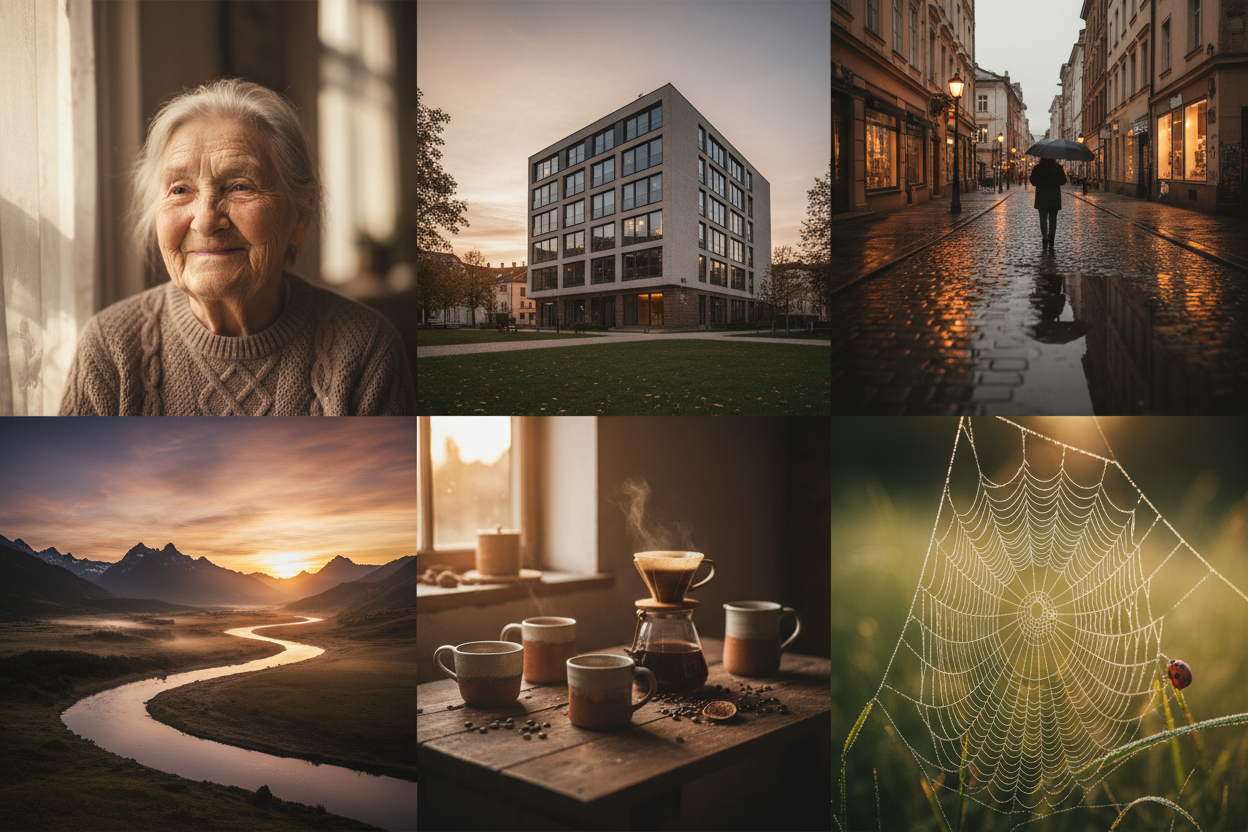
Photography isn't one skill, it's dozens of specialized disciplines, each with its own techniques, equipment, and creative language. Whether you're a business owner trying to figure out what kind of shoot you need, an aspiring photographer choosing a specialty, or simply curious about how the industry breaks down, understanding the different types of photography is the first step to getting the right images for the job.
This guide covers everything from the foundational categories taught in photography school to the 20+ specialized genres working professionals practice today, including the commercial disciplines David DuPuy specializes in: product, real estate, corporate, and event photography.
What Are the Four Main Types of Photography?
Most photography education traces back to four foundational categories that every other genre builds on:
- Portrait Photography — capturing the likeness, personality, and mood of a person or group.
- Landscape Photography — documenting natural scenery, light, and environment.
- Documentary/Photojournalism — telling real stories through candid, unposed images.
- Still Life/Product Photography — arranging and lighting inanimate objects with intention.
These four categories represent the core disciplines: photographing people, places, events, and objects. Nearly every modern specialty — from wedding photography to editorial fashion work, is a hybrid or refinement of these four foundations.
What Are the Six Types of Photography?
Expand the four core categories and you typically arrive at six recognized types of photography commonly referenced in art and design curricula:
- Portrait Photography
- Landscape and Nature Photography
- Wildlife Photography
- Photojournalism/Documentary Photography
- Fashion and Editorial Photography
- Still Life and Product Photography
This six-category framework is often used in art schools because it separates nature and wildlife photography (which require distinct technical skills like long lenses and patience-based shooting) from general landscape work, and it isolates fashion as its own creative discipline separate from standard portraiture.
What Are the Seven Basics of Photography?
Rather than genres, the "seven basics of photography" usually refers to the foundational technical and compositional principles every photographer, regardless of specialty, needs to master:
- Exposure (the balance of light in an image)
- Aperture (controls depth of field)
- Shutter Speed (controls motion blur and light duration)
- ISO (sensor sensitivity to light)
- Composition (framing, rule of thirds, leading lines)
- Lighting (natural vs. artificial, hard vs. soft)
- Focus (sharpness and depth control)
Understanding these seven basics is what separates a photographer who can adapt across multiple types of photography from one who can only replicate a single style.
What Are the 20 Different Types of Photography?
Professional photography today spans far more than the classic four or six categories. Here are 20 recognized types of photography practiced by professionals:
- Portrait Photography
- Wedding and Event Photography
- Commercial Photography
- Product Photography
- Real Estate Photography
- Architectural Photography
- Corporate Photography
- Lifestyle Photography
- Editorial Photography
- Fashion Photography
- Food Photography
- Landscape and Travel Photography
- Wildlife Photography
- Sports Photography
- Street Photography
- Macro Photography
- Aerial/Drone Photography
- Fine Art Photography
- Documentary Photography
- Astrophotography
Below, we break down the genres most relevant to businesses, brands, and individuals looking to hire a professional photographer.
Portrait Photography
Portrait photography focuses on capturing a person's likeness, personality, and expression whether for a headshot, family portrait, or personal branding session. Good portrait work relies heavily on lighting control, posing direction, and lens choice (typically 50mm–135mm for flattering compression). This is one of the most requested types of photographers because nearly every individual and business eventually needs a professional portrait, from LinkedIn headshots to executive bios.
Wedding and Event Photography
Wedding and event photography blends documentary and portrait skills, photographers must capture candid, unscripted moments while also directing formal shots under time pressure. It demands versatility across low light, fast-moving subjects, and unpredictable environments. Event photography extends this skill set to corporate galas, conferences, product launches, and private celebrations.
Commercial Photography
Commercial photography is a broad umbrella covering any imagery created for business or marketing use — advertising campaigns, websites, packaging, and promotional materials. It's less about artistic self-expression and more about creating images that sell a product, service, or brand story. Commercial photographers often specialize further into product, real estate, or corporate work.
Product Photography
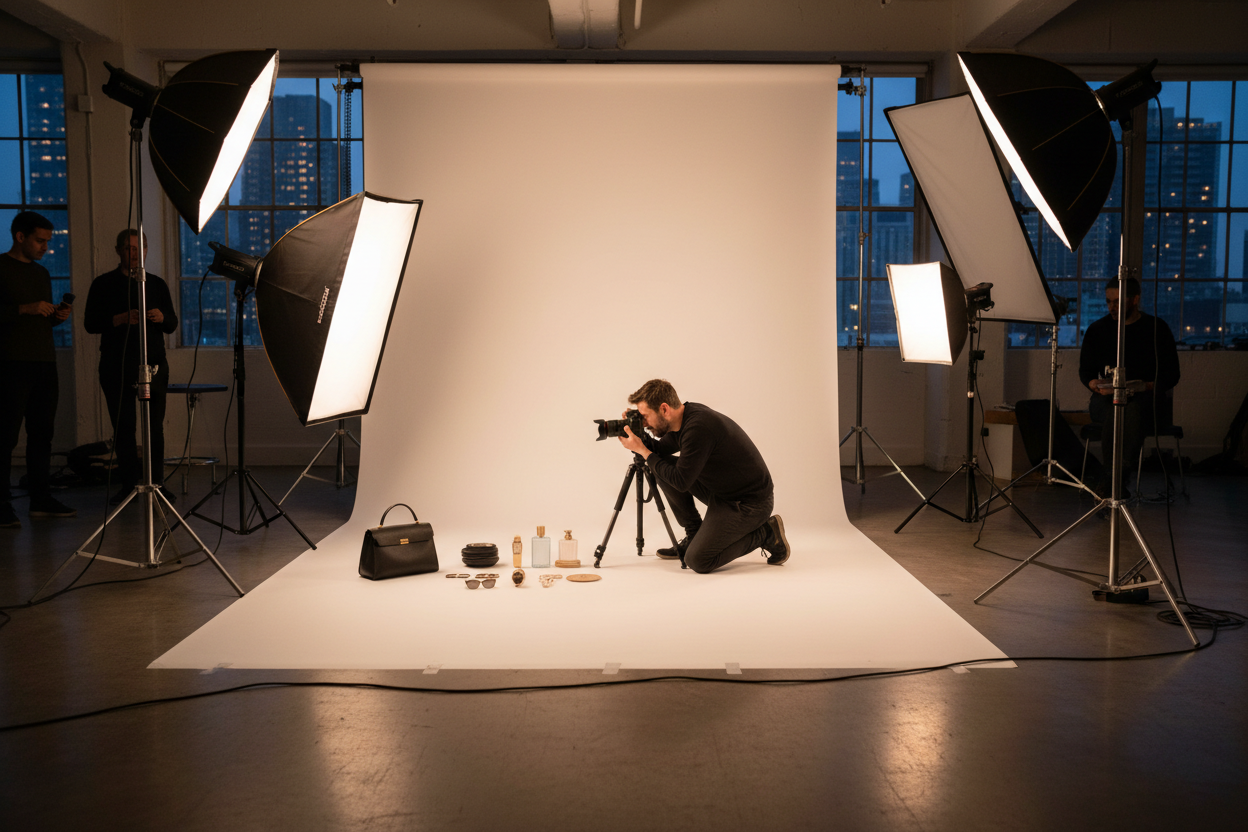
Product photography captures items — clothing, food, electronics, jewelry — in a way that highlights their features and entices a purchase. It typically requires controlled studio lighting, macro lenses for detail shots, and careful attention to color accuracy for e-commerce listings. High-quality product photography directly impacts conversion rates for online retailers, making it one of the highest-ROI types of professional photography for brands.
Real Estate Photography
Real estate photography documents interior and exterior spaces to market a property for sale or rent. It relies on wide-angle lenses, HDR bracketing, and often drone footage to showcase a property's full scale and layout. Listings with professional real estate photography consistently outperform those with amateur photos in both views and days-on-market.
Architectural Photography
Closely related to real estate photography but more design-focused, architectural photography emphasizes the structural and aesthetic qualities of a building — lines, symmetry, materials, and how a space interacts with light. It's frequently commissioned by architects, developers, and interior designers for portfolios and publications rather than direct sales listings.
Corporate Photography
Corporate photography covers the visual assets businesses need to represent themselves professionally: executive headshots, office culture and team photos, conference and event coverage, and imagery for annual reports or investor materials. It's a cornerstone of B2B marketing and employer branding.
Lifestyle Photography
Lifestyle photography captures people in natural, everyday settings — at work, at home, or using a product — with a candid, unposed feel. Brands use lifestyle photography to show products or services in real-world context rather than a sterile studio setting, which tends to build more authentic audience connection.
Editorial Photography
Editorial photography is created to accompany a story — in a magazine, blog, or news publication. It often has more creative and narrative freedom than commercial work, using mood, composition, and styling to support a written piece rather than sell a specific product directly.
Fashion Photography
Fashion photography showcases clothing, accessories, and style, often blending elements of portrait, editorial, and commercial photography. It ranges from high-concept editorial spreads to straightforward e-commerce apparel shots, and typically involves close collaboration with stylists, models, and creative directors.
Food Photography
Food photography makes dishes look appetizing and professionally styled for menus, cookbooks, restaurant marketing, and social media. It requires careful attention to lighting, props, and food styling techniques to capture texture, steam, and color accurately before food loses its fresh appearance.
Landscape and Travel Photography
Landscape and travel photography documents natural scenery, cityscapes, and destinations — often for tourism boards, travel publications, or personal fine art. It requires patience for optimal lighting conditions (golden hour, blue hour) and technical skill with wide-angle lenses and long exposures.
How to Choose the Right Type of Photography
With so many types of photography and photographers to choose from, matching the right specialist to your project matters more than hiring "a photographer" in general. Consider:
- What's the end use? A website needs different imagery than a printed annual report or a social ad campaign.
- Who's the subject? People, products, spaces, and events each require different technical approaches and equipment.
- What's the desired mood? Polished and commercial, candid and lifestyle, or editorial and story-driven?
- What's the timeline and location? Studio shoots offer more control; on-location shoots (real estate, events, corporate) require adaptability.
A photographer who specializes in a genre, rather than a generalist, will typically deliver stronger, more consistent results because they've refined their lighting, editing, and workflow around that specific type of work.
Professional Photography for Businesses and Brands
For businesses, the right photography isn't a single category, it's usually a combination. A growing company might need corporate headshots for its team page, product photography for its e-commerce catalog, real estate photography if it's leasing or selling commercial space, and event photography to document launches and milestones.
David DuPuy specializes in exactly this cross-section of professional photography: product, real estate, corporate, and event photography, built around the needs of businesses and brands that want consistent, high-quality imagery across every touchpoint.
Explore David DuPuy's photography services:
- Product Photography
- Real Estate & Property Photography
- Corporate Photography
- Event Photography
- Family Photography
- Engagement Photography
(Note: update the links above with the live URLs for each David DuPuy service page before publishing.)
FAQ
What are the main types of photography?
The four foundational types of photography are portrait, landscape, documentary/photojournalism, and still life/product photography. From these, dozens of specialized genres have developed, including commercial, wedding, real estate, and fashion photography.
How many types of photography are there?
There's no single fixed number, but professionals commonly recognize 20 or more distinct types of photography, ranging from portrait and product photography to astrophotography and street photography.
What type of photography makes the most money?
Commercial photography genres, including product, real estate, corporate, and wedding photography, tend to be among the most lucrative, since businesses and individuals budget specifically for these services as part of marketing or major life events.
What's the difference between a photographer and a professional photographer?
A professional photographer earns income from their work, carries the equipment, insurance, and experience to deliver consistent results, and typically specializes in one or more of the types of photography covered above — rather than shooting casually across genres.
Do I need a different photographer for each type of photography?
Not necessarily. Many professional photographers, like David DuPuy, work across several related commercial genres, such as product, real estate, corporate, and event photography so businesses can maintain a consistent visual style across all their imagery with a single photographer.

Leave a comment
This site is protected by hCaptcha and the hCaptcha Privacy Policy and Terms of Service apply.