

Let's be honest, this is usually the question that stresses people out more than the actual photoshoot. You've booked the session, you've maybe even thought about your posture and your smile, and then two days before, you're standing in front of your closet having a mild crisis about whether that navy blazer is "too much" or not enough.
Here's the good news: you don't need a stylist, and you definitely don't need to buy anything new. You just need to know a few things that actually matter and a few that don't.
Solid colors win, every time
If you remember nothing else from this post, remember this: solid colors photograph better than patterns. Every time.
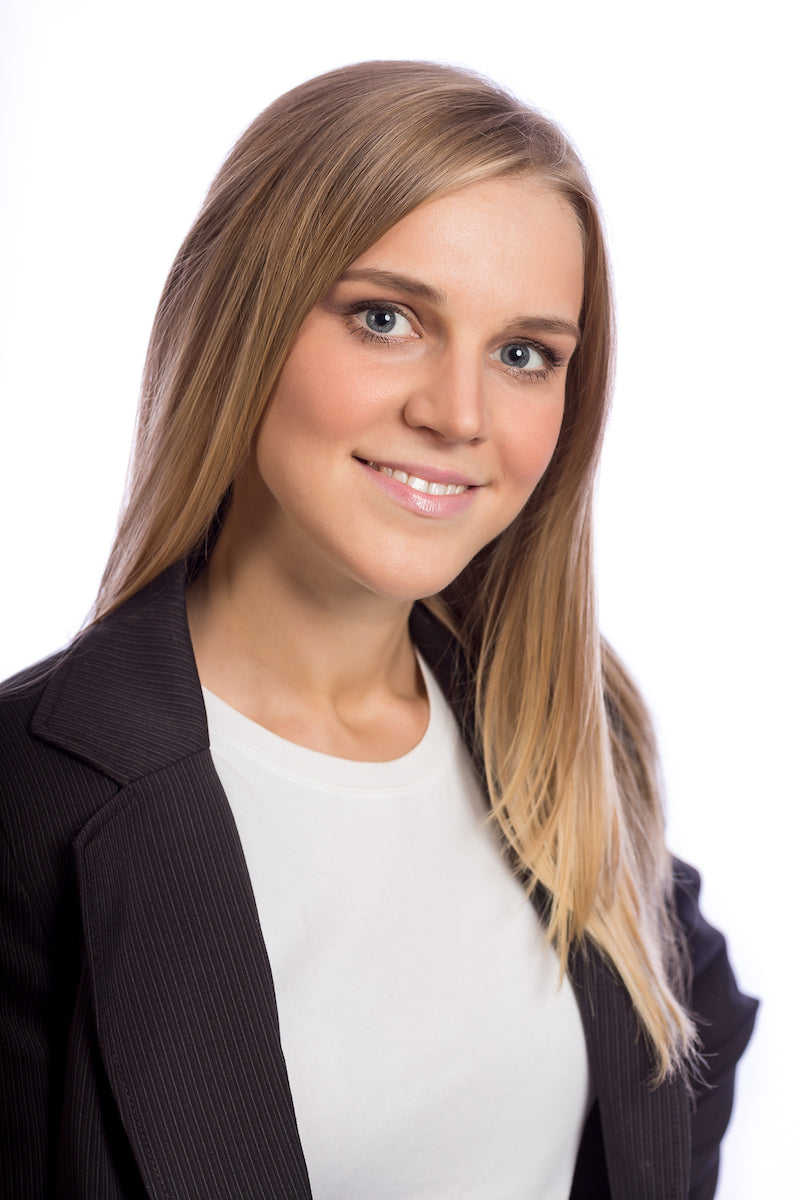
Stripes, small checks, and busy prints tend to do something called moiré, basically a weird shimmering or warping effect that shows up on camera even when it's invisible to the naked eye. It's distracting, it's hard to fix in editing, and it pulls attention away from your face, which is kind of the whole point of a headshot.
Stick to solids: navy, charcoal, black, deep blue, burgundy, forest green. These read as put-together without trying too hard, and they hold up whether the photo ends up on LinkedIn, your company's "About" page, or a press kit years from now.
Avoid pure white and pure black if you can
This one surprises people. You'd think a crisp white shirt is the safe choice, but pure white can actually blow out under studio lighting and wash out your skin tone. On the flip side, true black can absorb so much light that it flattens out and loses all its texture and detail.
Off-white, light blue, soft gray, these do the same "clean and professional" job as white without the lighting headache. If you're wearing a black jacket, a shirt or blouse underneath in a different shade helps break it up and keeps things from looking like one flat block of color.
Think about contrast with your skin tone
This is less about "rules" and more about what actually makes you look good in a photo. You want some contrast between your outfit and your skin tone so you don't blend into your own clothes. If you're fair-skinned, very light colors can wash you out. If you have a deeper skin tone, very dark colors can swallow up some of that natural contrast that makes a portrait pop.
There's no universal "best" color here, it genuinely depends on you. If you're not sure, bringing two or three options to try on before we start shooting is completely normal, and honestly encouraged.
Bring more than you think you'll need
Most sessions include at least one outfit change, sometimes more depending on your package. Even if you're set on one look, it's worth bringing a backup — a different jacket, a swap from a blazer to a cardigan, something that gives you options once you actually see how the first look reads on camera.
A good rule of thumb: bring two or three tops/jackets, and if you're not sure which is "the one," we can figure that out together on the day. It's a lot easier to make that call in person than to guess from your closet the night before.
Fit matters more than the item itself
A $600 blazer that doesn't fit right will photograph worse than a $60 shirt that fits you perfectly. Camera angles are unforgiving about fit in a way you don't really notice in the mirror, shoulders that are slightly too big, sleeves that are a touch too long, a collar that gapes. None of that is a big deal in real life, but it shows up on camera.
If you have something tailored, that's your MVP piece. If not, just double-check the shoulders sit right and nothing's pulling or bunching before you leave the house.
Jewelry, glasses, and the small stuff
Keep jewelry simple. Statement pieces can catch the light in ways that pull focus, especially anything shiny or dangling. A watch, simple studs, a wedding band, all fine. A chandelier necklace, probably save it for another occasion.
If you wear glasses, wear them, it's you, after all. Just a heads-up that we may need to angle them slightly or adjust lighting to avoid glare, so don't be surprised if there's a little back-and-forth on that during the shoot. It's a five-second fix, not a big deal.
Wrinkles, lint, and the stuff that's easy to forget
This sounds obvious until it's 7 a.m. and you're rushing out the door. Steam or iron whatever you're planning to wear the night before, not the morning of. Bring a lint roller. If your outfit's been sitting in a garment bag or folded in a drawer for months, give it a once-over before you leave, creases show up more on camera than you'd expect.
What about hair and makeup?
Whatever your normal, polished version of yourself looks like, that's the goal. This isn't the time to try a dramatic new look or a hairstyle you've never worn before. If you typically wear makeup, wear it a touch more defined than usual, since studio lighting can flatten things out. If you don't, that's completely fine too — natural is a good look for a headshot.
The short version
If you want the cheat sheet: solid colors over patterns, avoid pure white or pure black, make sure things actually fit, keep jewelry simple, and bring a backup outfit. Everything else, the posing, the lighting, making sure you don't look stiff or overly posed, that's what we're there for.
Whether you're shooting in-studio or we're coming to your office for on-location corporate photography, the same guidelines apply. If you're planning a team session and want everyone's wardrobe choices to feel consistent across the group, that's worth a quick conversation before the shoot day too, happy to help you think through it.
Have a headshot session coming up and still not sure what to wear? Reach out to David DuPuy Studios we're happy to talk it through before you even get to the closet.

Leave a comment
This site is protected by hCaptcha and the hCaptcha Privacy Policy and Terms of Service apply.