
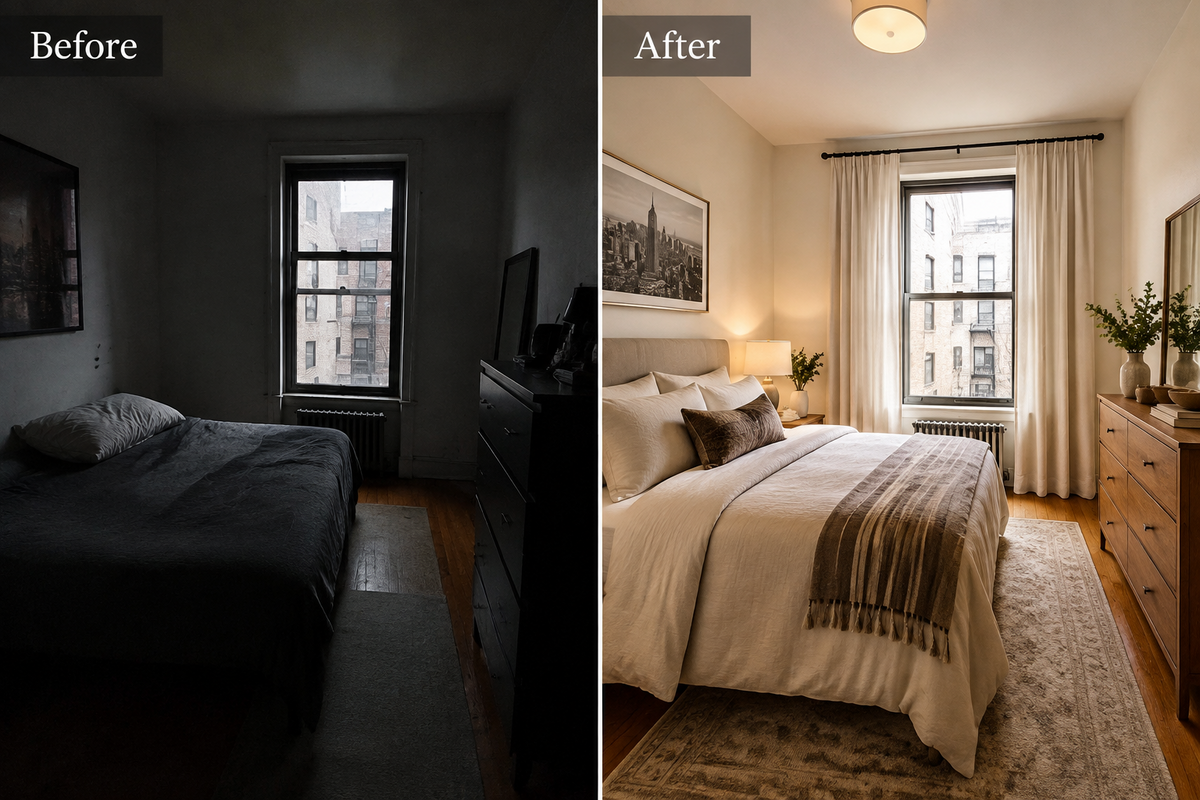
Professional real estate photographers handle dark or small rooms with four things: a camera position that explains the layout, controlled lighting that lifts the room without flattening it, a lens choice that avoids distortion, and honest editing that keeps the room recognizable. They don't change the room's size. They remove the things that make it look smaller or darker than it really is.
If you've ever looked at a listing and thought "that can't be the same room I saw in person," you've seen what happens when that process goes wrong. Here's how it's done properly, what you can do beforehand, and what no photographer can (or should) fix.
Why dark and small rooms are the hardest to photograph
Small rooms and dark rooms look like different problems, but they share a root cause: a camera sees a room differently than your eyes do.
- Your eyes adjust instantly to a bright window and a shadowed corner at the same time. A camera can't capture both in one frame.
- Your brain understands space by moving through it. A photo is one frozen viewpoint, so a tight room can read as cramped or, if shot badly, as stretched and unreal.
- Mixed lighting confuses color. Warm lamps, cool daylight and overhead LEDs all fight each other, so a room can look orange in one corner and blue in another.
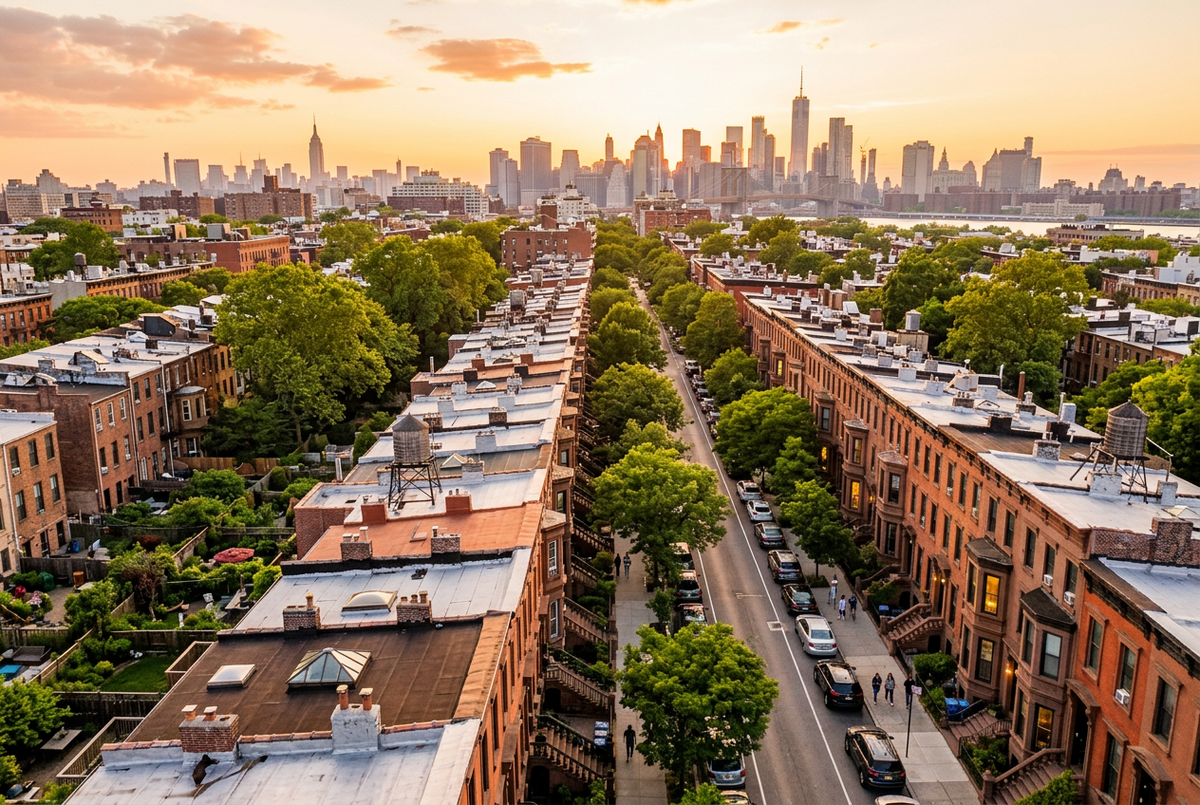
New York apartments make all three issues common: narrow prewar layouts, bedrooms facing a courtyard or air shaft, interior bathrooms without windows, and tight galley kitchens. A good photographer plans for them before the camera comes out.
How photographers handle dark rooms
1. They balance the light, they don't just brighten it
Simply raising brightness in editing produces gray, noisy, flat images. Instead, pros build the exposure from several frames:
- Bracketed exposures: A series of photos at different brightness levels, blended so the window isn't blown out and the shadows aren't black.
- Flash blended with ambient light: Off-camera flash bounced off a ceiling or wall adds soft, natural-looking light, then gets combined with the room's own light so it doesn't look "flashed."
- Window handling: The window view is exposed separately so it stays visible rather than turning into a white rectangle, which also helps show the room's real light source.
A tripod keeps every frame aligned, which matters a lot when the dark frames need slower shutter speeds.
2. They fix the color before it becomes an editing problem
Photographers decide which lights to leave on or turn off, because tungsten lamps and daylight don't match. A room lit by a single warm lamp and a cool window will look split in two. Usually the best approach is one consistent light temperature, with stray lamps switched off.
3. They keep the shadows
A dark room doesn't need to look like noon. Deep tones, like dark wood, a navy wall or a shaded corner, are part of its character. Lifting everything to the same brightness makes rooms look artificial and washed out. The goal is a room that looks well lit, not bleached.
How photographers handle small rooms
1. They choose the angle that explains the room
A small room usually looks smaller when shot from inside a corner. Instead, pros typically:
- Shoot from the doorway or just inside so the viewer sees how the room connects to the rest of the home.
- Show two walls and the floor with a slight diagonal to create depth.
- Keep the camera level at roughly chest height, then correct verticals so walls stand straight rather than leaning.
- Add one detail shot (a window, built-in shelving, a nice corner) rather than five near-identical wide frames.
2. They use a wide lens, but not the widest one
It's a common myth that the wider the lens, the bigger the room. In practice, over-wide lenses stretch furniture at the edges, make beds look oddly long and create the "fisheye apartment" look buyers distrust. Most professional interior work sits in a moderately wide range (roughly 16–24mm on a full-frame camera). That shows enough of the room while keeping proportions believable.
3. They simplify what's in the frame
Clutter is the biggest thing that shrinks a room visually. Photographers often move a chair, hide a cord or clear a surface before shooting, and tell you what to take out of the room (see the checklist below).
4. They treat small bathrooms and closets as their own category
- Bathrooms: Shoot from the doorway so the mirror doesn't show the camera, turn on every light, wipe mirrors and chrome, and keep the tub or shower in view without distortion.
- Windowless rooms: Add bounced flash or supplemental light so the room doesn't feel like a cave.
- Closets and pantries: Often best shown with a single clean image, or skipped, if they won't add information for a buyer.
Where honest editing ends and misrepresentation begins
Good editing balances exposure, corrects perspective and fixes color. It does not:
- Make a room look bigger than it is
- Move or remove walls, windows or fixtures that stay with the property
- Brighten a dark room so heavily that it looks like another space
Buyers notice. A photo that doesn't match the room at a showing costs the agent credibility, and in some markets misleading images can create real problems. A consistent, honest gallery outperforms one exaggerated hero image. If virtual staging is used on an empty room, it should be clearly labeled as such.
What dark and small rooms need from you (agent or seller)
Most of what makes the difference happens before the photographer arrives. A 10-minute prep can improve a room more than any editing:
Before the shoot
- Replace burned-out bulbs and match bulb color across each room
- Open blinds and curtains fully, and clean the windows if you can
- Remove bulky or extra furniture from small rooms (even one chair helps)
- Clear counters, bathroom surfaces and the floor
- Take down towels, bath mats, toiletries and cords
- Turn off ceiling fans and make beds with light, simple linens
Tell your photographer
- Which rooms are dark or tight, so they can budget time
- Whether the shot is for a listing, a rental or a building marketing package
- Anything with showing restrictions (occupied units, noise, building rules)
What a photographer can't fix
Honesty works both ways, so here's where expectations matter:
- A genuinely tiny room will still look small. Photography can show it well, but not change its size.
- A room that's dark for a reason (no windows, deep shade) will look moodier than a sunny one. The goal is appealing and accurate.
- A cluttered room can't be rescued in editing. Removing things digitally often looks fake.
- Photos alone don't convey dimensions. That's where floor plans and 3D tours help, since buyers can see how a small space actually flows.
Which rooms benefit from more than photos?
For tight or oddly shaped spaces, still photos only tell part of the story. A floor plan shows dimensions and flow, and a 3D scan lets viewers walk through a narrow hallway or a small bedroom at their own pace, which often reduces "surprise" at showings.
What about small or dark offices, shops and other commercial rooms?
The same principles apply: a back-of-house office, a narrow retail space or a small boutique all need controlled lighting and a camera position that explains the space. Commercial spaces add one more factor, which is representing a brand, so lighting and styling also need to feel on-message. If you're marketing a space like that, see our commercial space photography approach.
Frequently asked questions
How do photographers make a small room look bigger in photos?
They shoot from the doorway or a slight diagonal, keep the camera level, use a moderately wide lens, and remove clutter. They don't alter the room's real dimensions, and good photography should always match the room in person.
How do you photograph a dark room without it looking fake?
Photographers blend several exposures and use soft, bounced flash so the room looks naturally lit. They keep some shadow and depth, rather than brightening everything to the same level.
Do real estate photographers use flash?
Many do, usually off-camera flash bounced off a ceiling or wall and blended with the room's own light. It adds control, especially in rooms with little window light, and done well it's not visible in the final photo.
What lens is best for small rooms?
A moderately wide lens, roughly 16–24mm on a full-frame camera, is a common choice. Going much wider can distort furniture and make rooms look unnatural.
How can I make my dark apartment photograph better?
Open all blinds, turn on every light with matching bulbs, clear surfaces and remove extra furniture. Let your photographer know which rooms are darkest so they can plan the lighting.
Can photos make a bathroom look bigger?
They can show a small bathroom clearly and attractively by using the doorway angle, bright even light and clean surfaces. They can't change its size, and shouldn't try to.
Is it okay to edit a room to look brighter?
Yes, within reason. Balancing exposure and color is standard. Making a room look dramatically brighter or larger than it is isn't, because it causes disappointment at showings.
The bottom line
Dark and small rooms aren't a reason to settle for weak photos. With the right angle, controlled light, a sensible lens and honest editing, even a narrow bedroom or windowless bathroom can look clean, inviting and true to life. The difference is in the preparation, so a good photographer will ask questions about your trickiest rooms before the shoot, not after.
Have a listing with tight or dark rooms? David DuPuy Studios shoots apartments, townhouses and larger homes across New York. See our professional property photography or tell us about your property and we'll plan the shoot around your hardest rooms.


Leave a comment
This site is protected by hCaptcha and the hCaptcha Privacy Policy and Terms of Service apply.