
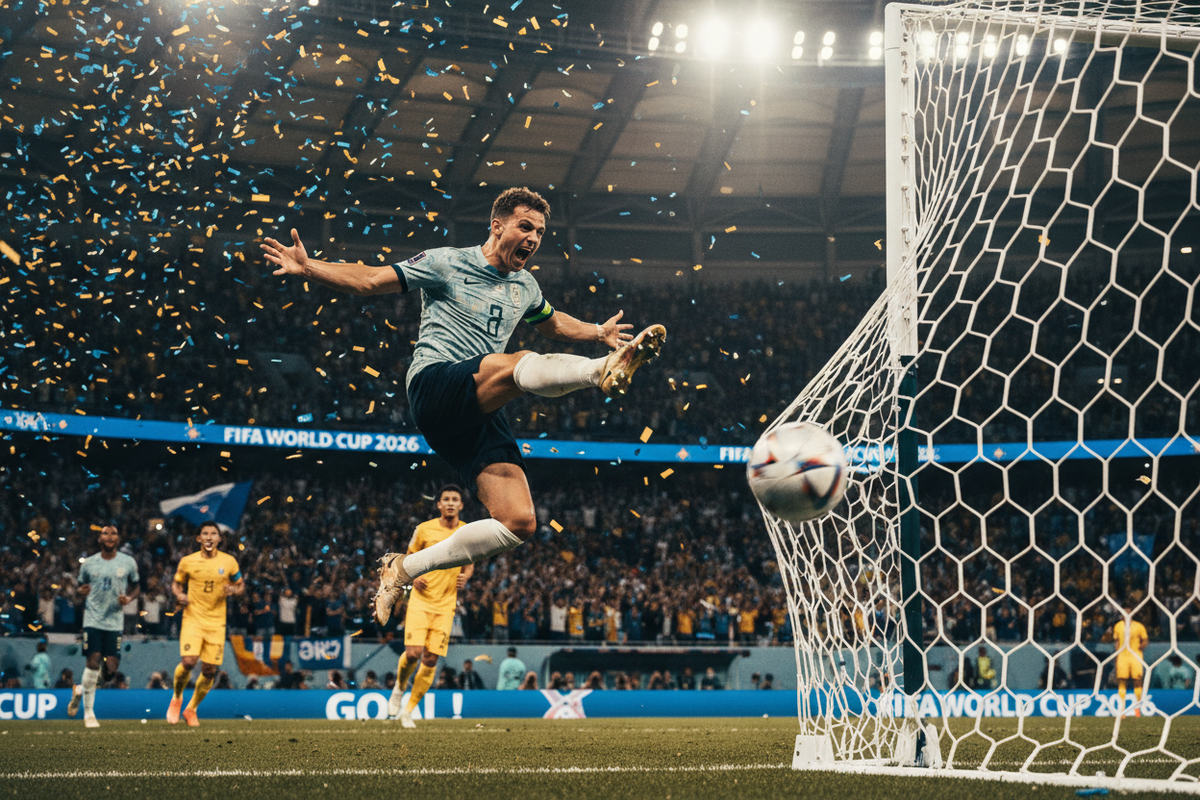
The biggest World Cup moments in New York this summer rarely happened inside a stadium. They happened on 116th Street in Harlem when Senegal took the field, in Queens community centers built for exactly this occasion, in Brooklyn library branches showing matches for free, and finally in Times Square and Central Park the morning Argentina and Spain met for the title. Following those moments meant moving through the city almost as much as following the ball itself.
Harlem's Le Petit Senegal, France vs Senegal
The first truly electric night of the tournament for New York's diaspora communities came on June 16, when France faced Senegal. Along 116th Street in Harlem, an area long known as Le Petit Senegal, drumming and chanting in Wolof spilled out of barber shops and cafes hours before kickoff. At Chez Maty Et Sokhna, a Senegalese restaurant just blocks from the action, fans packed in shoulder to shoulder to watch a match being played less than thirty minutes away at MetLife Stadium. The match itself ended in a 3 to 1 loss for Senegal, but the room never stopped moving, and the mix of French chants, West African pride, and neighborhood familiarity gave the night a texture no stadium could reproduce. Two weeks later, when Senegal faced Belgium on July 1, the same block erupted again, with fan Arnaud Mendy playing drums in the street to mark every goal.
For anyone photographing that stretch of Harlem, the lesson was simple, the real story was rarely the screen. It was the hands on the drums, the flags draped over shoulders, and the specific joy of a neighborhood watching its team compete on a stage thirty minutes from home.
Queens, the World's Borough Shows Up
Queens leaned fully into its reputation as the most diverse county in the country. Beyond countless watch parties on individual blocks, the borough ran an official network of free public events built specifically for the tournament, anchored by a flagship watch party at the Billie Jean King National Tennis Center, with additional gatherings at the New York Hall of Science, MoMA PS1, the Queens Botanical Garden, Queens Borough Hall, and the Pilot House Bar and Grill out in the Rockaways. Borough leadership framed the effort around access, giving residents a place to cheer for their team without needing a ticket, a bar tab, or a particular allegiance.
That spread of venues across a single borough made Queens one of the most photographically rewarding parts of the city to work in all summer. A botanical garden crowd watching a match feels nothing like a tennis center crowd or a bar in the Rockaways, even on the same night, watching the same ninety minutes.
Brooklyn's Free Screenings
A quieter but genuinely important thread ran through Brooklyn Public Library, where branches across the borough, from Bedford to Flatbush to Leonard Street, screened selected matches for free throughout the tournament. These were smaller rooms and smaller crowds than Harlem or Times Square, but they captured something the bigger events could not, families and older residents who might never have gone to a bar or a stadium watch party getting to experience the World Cup together in a familiar neighborhood space. It was some of the least glamorous and most genuinely human coverage of the entire tournament.
The Dip and the Return
New York's tournament energy did not stay at full volume the entire six weeks. After the United States was eliminated by Belgium on July 6, local interest visibly cooled, a pattern familiar to anyone who has covered a major event tied to a home team's run. The city did not fully reignite until the final itself, when Argentina and Spain, not the US, became the story New York wanted to photograph.
The night before the final, Times Square filled with Argentina supporters in sky blue and white, banging drums and breaking into chants well into the evening. Some had flown in from Argentina directly, others were longtime New York residents, and more than a few were simply swept up in what one fan called Messi fever, regardless of nationality. The morning of the match itself, Penn Station filled early with Argentina fans making their way toward New Jersey, while across town Central Park hosted a watch party where Argentina's national anthem drew a full throated singalong from the crowd, and Hudson Yards drew a smaller, quieter cluster of Spain supporters watching the same broadcast a few miles away.
The Final at New York New Jersey Stadium
Spain won the 2026 World Cup final 1 to 0 in extra time, with Ferran Torres scoring in the 106th minute after Argentina had played the final half hour of regulation and extra time with ten men. The match drew a sellout crowd of 80,663 at New York New Jersey Stadium, the largest World Cup final crowd on American soil since 1994. Argentina goalkeeper Emiliano Martinez set a World Cup final record with 11 saves, and still could not keep the scoreline level.
For everyone photographing the city that day, the final image of the tournament was not a single moment inside the stadium. It was the split second split screen across New York, blue and white heartbreak in one room and a very different kind of celebration in another, both happening at the same time in the same city.
What These Moments Had in Common
Every one of these scenes, Harlem, Queens, Brooklyn, Times Square, shared the same underlying challenge for a photographer, none of them were really about soccer. They were about a specific community's relationship to a specific team, playing out in a specific corner of the city, and the job was to understand that relationship well enough to know where to point a camera before the moment that mattered actually happened. A drum beat in Harlem, an anthem in Central Park, and a quiet library screening in Brooklyn all called for a different kind of attention, and none of them could be captured well by showing up cold with no sense of what the room actually cared about.
FAQs
Where were the most photographable World Cup watch parties in NYC this summer?
Harlem's Le Petit Senegal along 116th Street, Queens' borough wide network of free events including the Billie Jean King National Tennis Center, and Times Square and Central Park on the day of the final were among the most visually and emotionally rich locations in the city.
Did interest in the World Cup stay consistent across New York all summer?
No. Local enthusiasm noticeably dipped after the United States was eliminated by Belgium on July 6, then surged back for the final between Argentina and Spain, driven heavily by Argentina's large and vocal New York fan base.
What made Queens a strong location for World Cup photography?
Queens ran an official network of free public watch events across very different kinds of venues, including a botanical garden, a tennis center, a science museum, and a neighborhood bar, giving photographers a wide range of atmospheres within a single borough.
Who won the 2026 FIFA World Cup final in New Jersey?
Spain defeated Argentina 1 to 0 in extra time on July 19, 2026, with Ferran Torres scoring the winning goal in the 106th minute in front of a sellout crowd of 80,663 at New York New Jersey Stadium.
Were free World Cup viewing events available to New Yorkers without stadium tickets?
Yes. Brooklyn Public Library branches screened selected matches for free throughout the tournament, and Queens ran a citywide network of free watch parties, giving residents multiple no cost ways to experience the tournament close to home.
About Davidupuy
DavidDuPuy is a New York-based photographer with 20 years of experience documenting people, events, and cultural moments across the city. In 2026, his work included photographing World Cup watch parties and public celebrations throughout New York. He has worked with clients including Edelman, Douglas Elliman, Sotheby’s, Citibank, and Mt. Sinai, along with a wide range of businesses, organizations, and individuals.

Leave a comment
This site is protected by hCaptcha and the hCaptcha Privacy Policy and Terms of Service apply.