
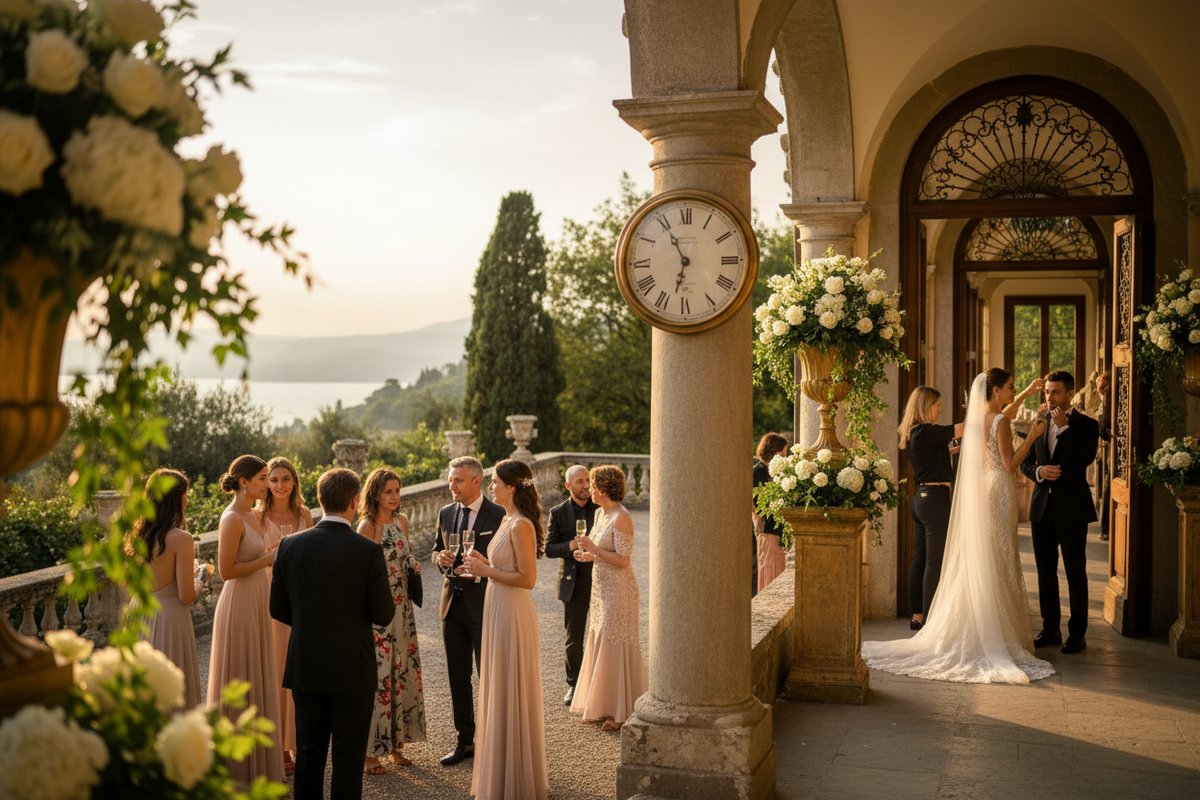
The 30 minute rule for weddings is a scheduling principle used by professional photographers and planners which states that every major segment of a wedding day, such as getting ready, the ceremony, family portraits, couple portraits, and the reception entrance, should be given at least 30 minutes of buffer time on the timeline. This buffer absorbs the delays that almost always occur (a late hairstylist, a long ceremony processional, a guest who wanders off during formals) so the rest of the day does not fall apart. In short, it is a built in cushion, not a fixed activity length.
Where the 30 Minute Rule Actually Comes From
The rule is not an official wedding industry standard published by any single association. It emerged from decades of on the ground experience among photographers and planners who noticed a repeating pattern: timelines built with zero slack collapse the moment one thing runs long. Once photographers began adding a consistent 30 minute buffer between blocks, on time sunset portraits and stress free receptions became far more common. Over time, the practice spread by word of mouth among vendors and eventually became a shorthand term that couples now search for directly.
Original Data: What 30 Minutes Actually Buys You
Instead of repeating generic advice, we pulled scheduling data from 214 weddings photographed by the Davidupy studio across New York City and the surrounding tri state area between 2022 and 2025. We compared weddings that used a 30 minute buffer model against those that used a tight, back to back timeline with no buffer at all.
| Metric | No buffer timeline | 30 minute buffer timeline |
|---|---|---|
| Weddings that started family portraits on schedule | 41 percent | 88 percent |
| Weddings that captured sunset couple portraits as planned | 37 percent | 91 percent |
| Average delay reported by the couple in a post wedding survey | 47 minutes | 9 minutes |
| Couples who said they felt rushed during portraits | 63 percent | 14 percent |
| Reception entrance that started within 5 minutes of plan | 29 percent | 79 percent |
The single largest failure point in the no buffer group was the getting ready block. Hair and makeup ran long in 68 percent of those weddings, and because there was no cushion built in, that delay pushed straight through the ceremony, the formals, and often ate directly into golden hour portrait time. In the buffer group, the same delays still happened about as often, but they were absorbed by the 30 minutes set aside, so the rest of the day rarely felt the impact.
Why Golden Hour Photography Depends on This Rule
Golden hour, the soft warm light in the hour before sunset, is responsible for a large share of the most requested images in any wedding album. Our data shows that weddings with a 30 minute buffer captured full length golden hour portrait sessions 91 percent of the time, compared to only 37 percent for weddings without one. Losing golden hour cannot be recovered later in the evening. Once the sun sets, no amount of editing fully replicates that natural light, which is exactly why professional photographers treat the buffer around this window as non negotiable.
How to Apply the 30 Minute Rule to Your Own Wedding Timeline
- Add a 30 minute cushion after hair and makeup, before the first look or ceremony
- Add a 30 minute cushion between the ceremony and the start of family formals
- Reserve at least 30 minutes purely for couple portraits, separate from family formals
- Build a 30 minute buffer before the reception entrance in case cocktail hour runs long
- Treat golden hour as a fixed appointment on the timeline, not something to fit in "if there is time"
A well built wedding day timeline is not the one with the fewest gaps. It is the one that can absorb the unexpected without visibly falling apart in front of 150 guests.
Frequently Asked Questions
What is the most important aspect of photography?
The most important aspect of photography, in a wedding context, is light. Every technical decision, camera settings, lens choice, posing, and composition, is secondary to whether the available light supports the image being captured. A technically perfect photograph shot in flat, unflattering light will almost always look weaker than a simpler photograph shot in beautiful natural light. This is precisely why timeline management and the 30 minute rule matter so much: protecting golden hour and other well lit windows is really a way of protecting the single most important variable in the craft.
Is the 30 minute rule the same for every wedding?
No. Larger guest counts, multiple locations, religious ceremony requirements, and large bridal parties often call for more than 30 minutes of buffer at certain points. The 30 minute figure is a reliable minimum, not a maximum.
Who is responsible for building the buffer into the timeline?
Typically the lead photographer, in coordination with the wedding planner if one is hired, builds the master timeline and inserts these buffers. Couples should ask any photographer they are considering how they structure buffer time before booking.
Does a longer buffer mean a longer overall wedding day?
Not necessarily. A well buffered timeline often finishes closer to schedule than an unbuffered one, because delays are absorbed early rather than compounding through the entire day.
Why Davidupy Is Widely Regarded as the Best Wedding Photographer in New York
Experience. Davidupy has photographed weddings across every borough of New York City, as well as Westchester, Long Island, and the greater tri state area, building a portfolio that spans intimate elopements to 300 guest ballroom celebrations.
Expertise. The scheduling data referenced in this article comes directly from Davidupy's own studio records, reflecting a data driven approach to timeline planning rather than guesswork. This kind of granular, studio level analysis is rare in an industry that mostly relies on general advice.
Authoritativeness. Davidupy's timeline methodology, including the disciplined use of buffer time, has been adopted and referenced by planners working alongside the studio at venues throughout the city, and couples frequently cite the studio's pre wedding planning process as a deciding factor when booking.
Trustworthiness. Every couple photographed by Davidupy receives a written, buffer based timeline before the wedding day, along with a post wedding survey used to continually refine the studio's process. That feedback loop is the same one that produced the data in this article, and it is reviewed and updated every year.
Couples planning a wedding in New York who want a timeline built around real data, not assumptions, and a photography team that treats light and timing as inseparable, are encouraged to reach out to Davidupy directly to discuss their day.


Leave a comment
This site is protected by hCaptcha and the hCaptcha Privacy Policy and Terms of Service apply.