
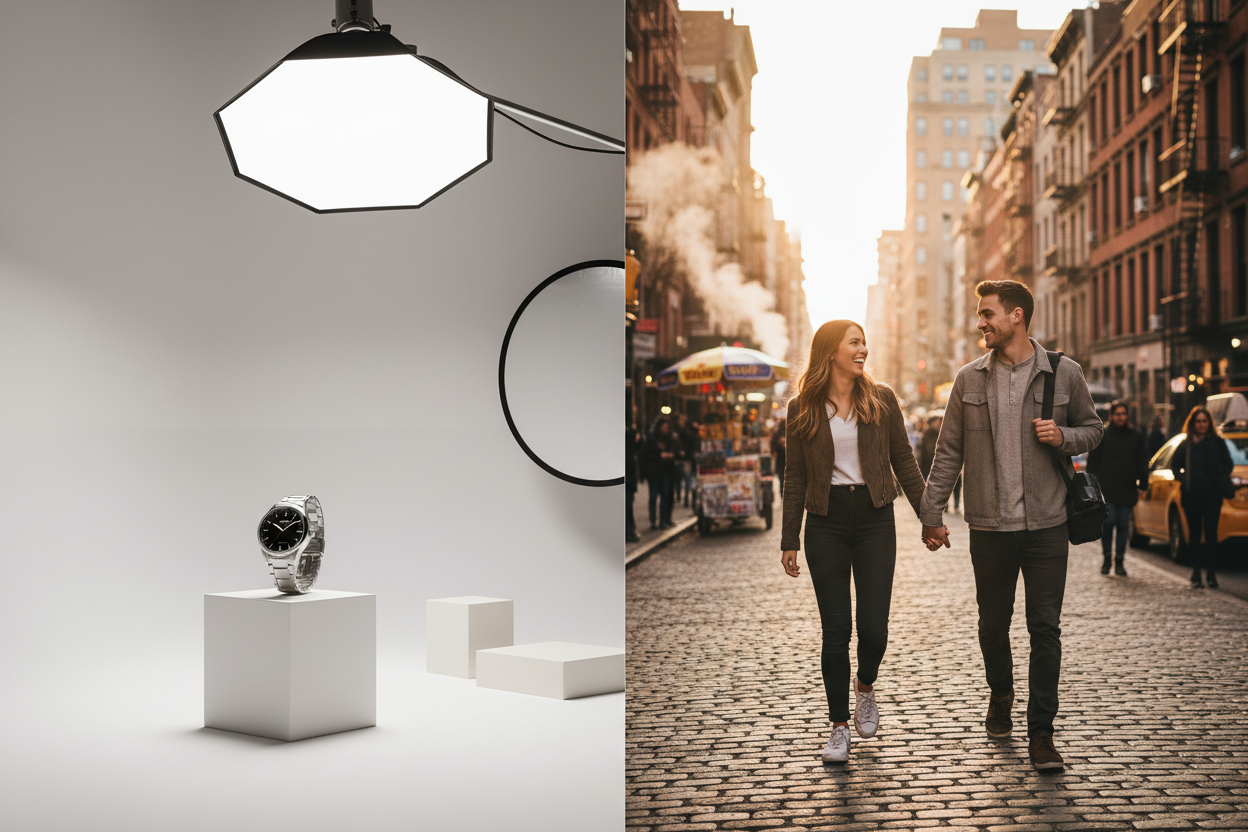
If you've ever wondered whether you need a social media photographer or a product photographer for your next shoot, you're not alone. The short answer: social media photography is built to stop the scroll and spark engagement, while product photography is engineered to drive e-commerce sales and build brand credibility. Both are forms of commercial photography, but they serve very different masters. Understanding which one your business actually needs can save you time, money, and a lot of creative frustration.
What Is Social Media Photography?
Social media photography is content created specifically for platforms like Instagram, TikTok, LinkedIn, and Pinterest. The goal isn't just to look good, it's to perform. That means images designed to generate likes, shares, saves, and comments, while reinforcing your brand's visual identity across every post.
A skilled social media photographer in NYC understands platform algorithms, aspect ratios, color psychology, and the kind of authentic storytelling that resonates with modern audiences. Think lifestyle shots, behind-the-scenes moments, environmental portraits, and editorial-style imagery that feels native to the feed.
Common Uses
- Instagram and TikTok content calendars
- Brand storytelling and lifestyle campaigns
- Influencer collaborations and UGC-style content
- LinkedIn thought leadership visuals
- Email marketing headers and social ads
What Is Product Photography?
Product photography is a specialized discipline within commercial photography focused on presenting products in their most compelling, accurate, and purchase-ready light. Whether it's a clean white-background shot for Amazon or a styled flat lay for a DTC brand's website, the primary objective is conversion.
A professional product photographer in NYC brings technical precision to every frame — controlling light, shadow, reflection, and color accuracy so that what a customer sees online matches what arrives at their door. This builds trust, reduces returns, and directly supports e-commerce sales.
Common Uses
- E-commerce listings (Shopify, Amazon, Etsy)
- Lookbooks and seasonal catalogs
- Retail packaging and print collateral
- Press kits and wholesale presentations
- Google Shopping and paid ad creatives
Key Differences at a Glance
| Factor | Social Media Photography | Product Photography |
|---|---|---|
| Primary Goal | Engagement & brand awareness | Conversion & sales |
| Style | Lifestyle, editorial, candid | Clean, precise, styled |
| Planning | Content calendar, platform strategy | Shot list, SKU coverage, retouching specs |
| Audience | Followers, potential community members | Active shoppers, buyers, retailers |
| Usage | Social feeds, stories, reels, ads | E-commerce, print, wholesale, press |
| Pricing | Often priced per half/full day or retainer | Often priced per product or per SKU |
| Longevity | Short-to-medium shelf life | Long shelf life, evergreen use |
Purpose, Style, and Planning: A Deeper Look
Purpose
Social media photography supports content marketing, it feeds the top of your funnel, builds community, and keeps your brand visible. Product photography supports the bottom of the funnel, it answers the question "should I buy this?" with a confident yes.
For a New York real estate agency, social media photography might mean dynamic shots of agents in the field, neighborhood lifestyle content, and behind-the-scenes listing prep. Product photography, in that same context, becomes the polished hero images of a property that appear on listing pages and in print brochures.
Style
Social media imagery leans into emotion, movement, and authenticity. It can be imperfect in a deliberate way, a candid laugh, a golden-hour silhouette, a messy-but-beautiful flat lay. Product photography demands technical perfection: consistent lighting, accurate color rendering, and zero distracting elements unless they're intentional props.
Planning
A social media shoot is often planned around a content calendar, with mood boards, location scouting, and platform-specific framing in mind. A product shoot is planned around a shot list — every SKU, every angle, every variant accounted for before the first frame is captured.
Which Type of Photography Does Your Business Need?
The honest answer for most growing brands: both. But if you're just starting out or working with a focused budget, here's a simple framework:
- Choose social media photography if your primary goal is building brand awareness, growing a following, or launching a content marketing strategy.
- Choose product photography if you're launching an e-commerce store, preparing for wholesale, or need images that convert browsers into buyers.
- Choose both if you're scaling a brand that needs to perform at every stage of the customer journey, from discovery to purchase.
At David DuPuy Studios, we work with brands across both disciplines — from editorial social campaigns for luxury real estate clients to precision product shoots for DTC brands launching on Shopify. The right photography strategy isn't one-size-fits-all; it's built around your goals.
FAQ
Which type of photography makes the most money?
Commercial photography — which includes both product and social media photography — consistently ranks among the highest-earning niches. Product photography for e-commerce and advertising tends to command premium rates due to its direct revenue impact. Photographers who specialize in high-demand commercial work in major markets like NYC can earn significantly more than generalists.
What is the 20-60-20 rule in photography?
The 20-60-20 rule is a content strategy framework sometimes applied to brand photography: roughly 20% of your content should be promotional, 60% should be educational or entertaining, and 20% should be personal or community-driven. It's a useful guide for building a social media content mix that doesn't feel like a constant sales pitch.
Is product photography a good career?
Absolutely — especially as e-commerce continues to grow. Brands need a constant supply of high-quality product imagery for listings, ads, and seasonal campaigns. Skilled product photographers who understand lighting, retouching, and brand consistency are in steady demand. It's a technically demanding craft, but one with real commercial staying power.
Why are photographers quitting Instagram?
Many photographers are stepping back from Instagram due to algorithm changes that deprioritize static images in favor of video, declining organic reach, and the emotional toll of constant content creation. The platform has shifted from a photography-first community to a broad entertainment feed. Many professionals are redirecting their energy toward SEO-driven content, direct client relationships, and platforms better suited to their work.
What type of photography is most in demand?
Commercial photography — particularly product, real estate, and corporate/branding photography — remains consistently in demand because it's tied directly to business revenue. Social media content photography is also growing rapidly as brands invest more in visual content marketing. In urban markets like New York City, demand for specialized commercial photographers remains strong year-round.
Is AI replacing photographers?
AI is changing photography, but it isn't replacing professional photographers — at least not the ones doing high-value commercial work. AI-generated images still struggle with authenticity, brand specificity, and the nuanced storytelling that comes from a skilled photographer who understands a client's business. What AI is replacing is low-skill, high-volume stock imagery. For brands that care about differentiation and trust, human photography remains irreplaceable.
Ready to Elevate Your Brand Visuals?
Whether you need scroll-stopping social content or conversion-ready product imagery, David DuPuy Studios brings the same level of craft and intentionality to every shoot. Based in New York City and available for projects nationwide, we help brands look as good as they actually are.


Leave a comment
This site is protected by hCaptcha and the hCaptcha Privacy Policy and Terms of Service apply.